Aquaculture in Australia
Introduction to Mariculture
The first evidence of aquaculture can be found in ancient Egyptian tomb paintings which show fish farms. By the 5th century B.C., Chinese scholars wrote of aquaculture as a long-established practice. Trout were the first fish to be spawned in captivity. This was achieved by a German scientist in the 1760's.
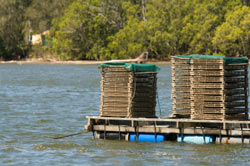
Aquaculture is the farming of freshwater and saltwater organisms such as fish, molluscs, crustaceans and aquatic plants. In this unit, I will concentrate on Marine aquaculture also known as Mariculture. Marine Aquaculture involves growing then harvesting marine organisms under controlled conditions usually in sheltered coastal waters. This unit contains general information about mariculture in Australia and information relevant to each state and the Northern Territory.
This unit has been developed to provide the public and students with a comprehensive, easy to understand guide to Mariculture in Australia. Whilst there is a lot of information available much of it is contained in complex technical reports and on hard to find industry websites. We hope that you find this guide useful and interesting. |
|
| |
|
The importance of mariculture
Fish supplies from traditional marine and inland capture fisheries are unlikely to increase substantially in the future and aquaculture production will need to rise to help satisfy growing world demand for fisheries products.
The world's aquaculture industries are expanding rapidly, including the Australian aquaculture industry. Global aquaculture production has more than doubled in weight and value in the 90's.
Between 1990 and 1999, global production of wild caught fisheries rose by 7.3 million tonnes (9%), and global aquaculture production rose by 20.2 million tonnes (155%) . In 1999, aquaculture accounted for 33.3 million tonnes (26.4%) of total world production of finfish, crustaceans and molluscs. Nearly all (98%) of world aquaculture production was produced in 30 countries, with China alone accounting for 22.8 million tonnes (69%) of world production in that year. The vast majority of production is carp, accounting for around 50% of aquaculture production measured as weight or value.
The world’s population is growing faster than the supply of fish. According to the Food and Agriculture Organisation (FAO) of the United Nations, most of the world’s fisheries are either fully exploited or over exploited and consequently any further increases in global consumption of seafood must be met by aquaculture. In 2004, aquaculture provided about 43% of global seafood consumed (FAO, 2006). This figure increased from 26% in 1996. The Australian aquaculture industry in 2003-04 was valued at $732 million, about one third of the total dollar production of the seafood industry.
Australian aquaculture producers need to follow a range of federal, state and local government environmental laws and codes of practice that ensure the long-term sustainability of the industry and environment. |

|
Aquaculture in Australia
The Australian aquaculture industry occurs in diverse environmental areas including tropical, subtropical and temperate sectors. The production of juveniles of several species of finfish, molluscs and crustaceans has been undertaken for some years, initially for restocking wild populations and more recently as stock for grow-out operations providing mature fish to restaurants and export markets. The location of aquaculture is dependent on seasonal factors, the type of species being cultivated, the stage of aquatic organisms in their life-cycle and proximity to marine parks. Point-source pollution from aquaculture is increasingly subject to regulation. For example, in the Great Barrier Reef region new regulations were established in 1999 to control the quality of aquaculture discharges. It is likely that aquaculture in regional areas will experience strong growth due to the lack of suitable sites and high competition for coastal zones near metropolitan cities.
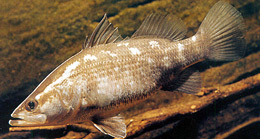
Over the past 30 years there has been a significant increase and diversification of aquaculture species farmed in Australia. Of the approximately 60 different species farmed, the major contributors are tuna, pearl oysters, salmon, edible oysters and prawns.
Australian aquaculture production rose by 146% in the decade to 2000-01, compared to a rise of 46% for the total gross value of fisheries production. In 2000-01, aquaculture accounted for 30% of the total gross value of fisheries production, to the value of $746m, for 43,602 tonnes produced, compared with $237m in 1990-91. Prawn farming production rose from 15 tonnes in 1984 to 2,800 tonnes in 2000-01. Australian aquaculture is expected to continue to show strong growth for the next 10 years and, on current estimates, the value of production will be in excess of $1b by the end of this period. The industry directly employs about 5,000 people, provides regional development opportunities in rural Australia and contributes to export growth. Nevertheless, total production is low compared to that in other countries.
In 2007-08 Australia exported $1.3billion worth of fisheries
products, headed by rock lobster, pearls, abalone, tuna and
prawns.
The top five export destinations were Hong Kong, Japan,
America, Chinese Taipei and Singapore.
In the same period, Australia imported $1.4billion worth of fisheries
products, headed by $257 million worth of canned fish, $228 million
worth of frozen fish fillets, $167 million worth of prawns, $166 million of
pearls and $128 million of canned crustaceans and molluscs.
The top five import sources were Thailand, New Zealand,
Vietnam, China and Malaysia. The import value of seafood
from Vietnam and China has increased sharply in recent
years.
(Source, ABARE Economics Australian Fisheries Statistics
2008)
The Australian Seafood Importers Association estimates that
70% of seafood consumed in Australia is imported,
while the Prawn Association estimates 50 per cent of prawns
eaten in Australia are imported.
In 1999, the seafood industry together with the Australian Government set a ‘vision’ and ‘mission’ for aquaculture industry in Australia.
Aquaculture is established throughout Australia, from the tropical north to the cooler southern waters. The aquaculture industry is largely based in regional Australia and makes an important contribution to regional development. A report published in 1999 estimated that more than 7,000 direct and 20,000 indirect jobs were created in aquaculture industry.
Vision
"By 2010 a sustainable, vibrant and rapidly growing Australian aquaculture industry will achieve at least $2.5 billion in annual sales by being the world's most globally competitive aquaculture producer".
Mission
'Total commitment to economic, social and environmental benefits from aquaculture.'
Reference: Aquaculture Industry – Overview, Department of Agriculture, Fisheries and Forestry Australia.
Next: What marine species are farmed in Australia? |
|



