Seaweek Sponsors - Australian Maritime College (AMC)
| |
|
The Australian Maritime College (AMC), based in Launceston, Tasmania, is the national centre for maritime education, training and research. Courses range from certificate to doctoral level and include naval architecture, ocean engineering, marine and offshore systems engineering, maritime logistics management, fisheries and marine resources, marine and coastal conservation and maritime operations.
|
 |
AMC conducts internationally recognised research in areas such as ship hydrodynamics, structural engineering, cavitation, maritime business, and fisheries and marine resources.
For more information on courses at AMC visit www.amc.edu.au
Fishing Technologists at the Australian Maritime College (AMC), usually with the assistance of fisheries researchers, fishers and/or fisheries students, have been actively involved in the development and evaluation of a range of bycatch reduction devices (BRDs) for nearly two decades. Most of this activity has occurred in the last decade, reflecting the increased recognition in recent years that bycatch is a real problem that threatens certain species and also places a financial burden on the catching sector. The AMC circulating water channel (CWC) facility (or flume tank facility) has proven very useful in the development and evaluation of BRDs for various fishing gears. Past activity has included:
- Assessment of numerous turtle exclusion devices (TEDs) prior to their appearance in Australian prawn trawl fisheries
- Refinement of selected TEDs following their introduction in the 90’s
- Design and development of a Sea-lion exclusion device for use in fish trawls, both in Australia and New Zealand (Fig.1)
- Pre-deployment checks of TEDs and BRDs prior to field trial work being undertaken (Fig. 2)
- Sink-rate and drag coefficient measurements of demersal longline and pelagic longline components to ensure the likelihood of seabirds swallowing hooks during gear deployment is minimised (Fig. 3)
- Development and evaluation of numerous BRDs for use in prawn trawls, in particular square mesh windows and fisheyes (Fig. 4)
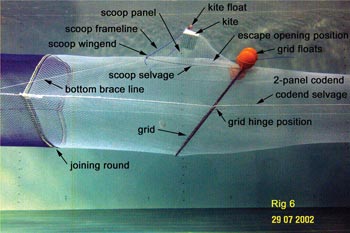
Figure 1. Side view of a section of a fish trawl equipped
with a Sea-lion exclusion device.
|
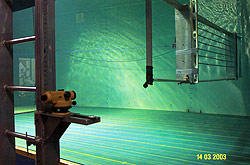
Figure 2. A section of demersal mainline being streamed in the
CWC to acquire drag coefficient values, which can then be
used to estimate the sink-rate of the longline and see if
it meets sink-rate targets set for specific fisheries. |
| |
|
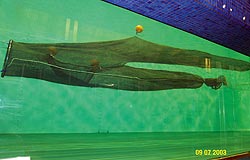
Figure 3. A JTED being streamed in the CWC as a pre-cursor to
field trials in Southeast Asian fisheries by the Southeast
Asian Fisheries Development Center (SEAFDEC)
|
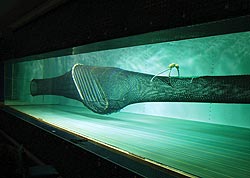
Figure 4. A codend equipped with a TED and a novel new BRD
being streamed in the CWC to acquire water flow data in close
proximity to the BRD. This data can then be used to explain
fish behaviour in the same region. |
|