|
As of February 2015, a regular visitor to the MESA web site (if such a person exists) would have noticed that this site hasn't been updated in recent months. There are two reasons for this.
Firstly, MESA is in a period of transition. After 30 years serving the needs of marine educators in the Australasian region, the MESA council took the strategic step of uniting with the Australian Association for Environmental Education (AAEE). MESA and AAEE have always been closely affiliated sharing similar aims so this is seen as a logical step. In effect, MESA has now morphed into the AAEE Marine & Coastal Special Interest Group.
All former MESA members and supporters are now encouraged to join AAEE and make an active contribution to the AAEE Marine & Coastal Special Interest Group. Go to www.aaee.org.au and follow the links to "Join Us".
Secondly, after a prolonged illness our web manager (Peter Biro) passed away suddenly on September 1st, 2014. Peter created the first MESA web site as part of Seaweek in 1996 and has been the voluntary MESA web manager ever since. To honour Peter's contribution it is our intention to keep this web site and the wealth of resources it contains active for as long as we can. To access these resources go to Seaweek, Site Resources and International News in the navigation bar above. We also plan to add a new section highlighting MESA History soon.
|
Peter Biro (1951 - 2014)
The following tributes reflect Peter Biro's contribution to MESA over those years.
"His contributions here (the MESA web site) and to supporting Seaweek over decades have helped bring the sea and its magic into thousands of peoples lives and we are all the richer for his efforts." (Mark Rodrigue - past MESA President)
"Peter diligently presided over our website and it was only with his continued passion for the site that it is what it is today. Peter crafted every page, added every image and tirelessly maintained it. He will be remembered and the site is his legacy." (Angela Colliver - past MESA President)
"Peter will always be an 'Unsung Hero' to me for Marine Education and life, in general. He has played a huge role in making a difference for our next generation." (Tim Hoile - past MESA President)
"Peter was my friend. How many hours did he give to the Marine Education Society's website over all those years? I have no idea. However, the website gave Aussies a public face to show the world that we were determined to make a difference." (Jody Plecas - past MESA Public Officer)
|
|

Seaweek is a celebration of the uniqueness of our "Ocean Planet"
Seaweek was a national initiative conducted annually by MESA since 1988. The aim of Seaweek has always been to "Celebrate the Sea" and, more specifically, to focus community awareness, provide information and encourage an appreciation of our marine and coastal environments. Members of the AAEE Marine & Coastal SIG will now coordinate Seaweek.
- For many years Seaweek was celebrated in March. However, in 2015 Seaweek will be held in the second week of September (September 5th to 13th).
- Each year a different theme is highlighted during Seaweek. The theme for Seaweek 2015 will be "Celebrating Seaweek". This theme will enable you to look back at past Seaweek themes and choose your favourite or simply celebrate 27 years of Seaweek.
- We also have some exciting plans for Seaweek 2016 and beyond. Stay tuned for further announcements.
|
| |

Seaweek 2014 - Sustainable Seas and Sustainable Aquaculture
The theme for Seaweek 2014 is Sustainable Seas. The theme provides a focus for students in schools and for communities to inform and inspire them about the diversity of our marine and coastal environments and how, through good management and individual action, we can all contribute towards the sustainability of these environments. There is a subtheme related to Aquaclture as well.Go to our Events page to find out what is on!
more .... |
|
| |
| AAEE Marine & Coastal Special Interest Group |
| |
Kate Keary created the AAEE Marine & Coastal Special Interest Group (SIG). The SIG already has its own Facebook Group as well as a mailing list for members to share conversations, ideas and resources. You don’t have to be a member of the AAEE to join the SIG, however the member benefits of this Association are exceptional. We would recommend anyone interested or working in environmental education join the AAEE.
|
|
|
| |
MESA on Facebook
The link to the facebook page is https://www.facebook.com/pages/Marine-Education-Society-of-Australasia/146351192098470?sk=wall
Facebook is a fantastic tool. Although MESA has now morphed into the AAEE Marine & Coastal SIG, the MESA facebook page will continue as a forum for people working or interested in marine education. It provides opportunities to link with others and throw ideas around. Kate Keary maintains and regularly checks the page, posting suggestions and providing info and interesting links. |
|
| |
International News
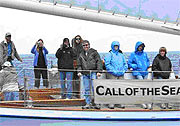 |
MESA member Harry Breidahl has recently updated the International News section. This section now includes information on the National Marine Educators Association (NMEA) 2015 Conference, The European Marine Science Education Association (EMSEA) 2015 Conference and the IPMEN 2016 Conference. Summaries of earlier international conferences and events can also be found in this section.
more .. |
|
|
| |
Marine Pests of Australia
|
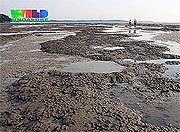 |
Australian marine environment is threatened by . invaders - marine pests! This section looks at the major pest species, where they cme from, their impacton Australian shores and how they can be controlled.
more ... |
|
|
| |
Saltmarshes
|
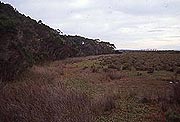 |
Saltmarshes are another important coastal ecosystem found around Australia. Find out about the biology, ecology and importance of saltmarshes. Also find out about some of the plants and animals living in them.
more ... |
|
|
| |
Seamounts
|
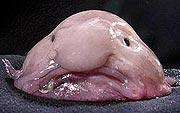 |
Seamounts are mountains rising from the sea floor to below the surface. They are the remains of extinct ocean-floor volcanoes that last erupted many million years ago, Find out about seamounts and their ecology and about some of the unusual animals living around them.
more ... |
|
|
| |
Seagrasses of Australia
|
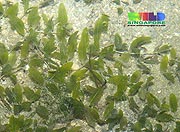 |
Seagarss meadows are found in all states around Australia. They are important nursery grounds for fish and help stabilise the coast. They are unique as seagrasses are the only marine flowering plants. Find out more about the biology and ecology of seagrasses,
more ... |
|
|
| |
Mangroves of Australia
|
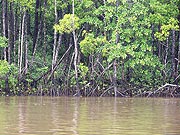 |
Find out about the distribution and divesity, adaptaions and reproduction of mangroves. Learn about the animals found in mangrove forests. How do mangroves benefit us and the environment, what threats are there on mangroves. Includes YouTube videos and Photo Galleries including images of nearly all the mangrove species found in Australia.
more ... |
|
|
| |
Sea Turtles of Australia
|
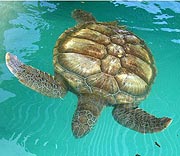 |
Find out about the biology, behaviour, distribution, migration and reproduction of the Sea Turtles of Australia. Includes detailed information about all six species found in Australian watees, YouTube videos and a Photo Gallery.
more ... |
|
|
| |
Bryozoa
|
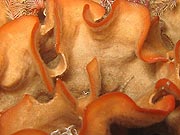 |
Find out about the biology, structure, reproduction and ecology of these coral like animals also known as Moss animals. Includes detailed information about the phylum, YouTube videos and a Photo Gallery.
more ... |
|
|
| |
Sea Snakes of Australia
|
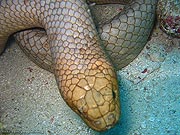 |
Find out about the biology, behaviour, distribution, reproduction and venom of the Sea Snakes of Australia. Includes detailed information about four species, YouTube videos and a Photo Gallery.
more ... |
|
|
| |
Marine Algae
|
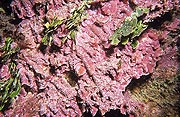 |
Our latest unit! Find out about seaweeds - red, brown, coralline and green. Learn about their structure, reproduction and uses.
more ... |
|
|
| |
Deep-Sea Biology
|
 |
by Paul H. Yancey, Ph.D.
Professor of Biology, Whitman College, Washington, USA
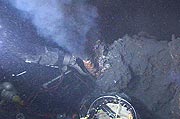
This section explores life and zones of the deep sea. It contains over 450 images and looks at the various ocean zones, animals of the deep, cold and hydrothermal vents and seeps and much more.
more ... |
|
|
| |
Marine Worms
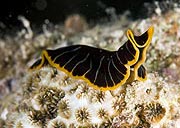 |
Marine worms are worms that live in a marine environment. Marine worms may only have their shape and the fact that they have 'worm' in their name in common. They include the Platyhelminthes (flatworms) , Nematoda (roundworms), Annelida (segmented worms( Chaetognatha (arrow worms), Hemichordata (acorn worms), Phoronida (horseshoe worms), Nemertea (ribbon worms or proboscis worms), Sipunculid worms (peanut worms) and Echiura (Spoon Worms and Innkeeper Worms).
more ... |
|
|
| |
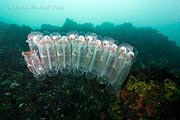
Tunicates
|
They are often confused with sea jellies but the tunicates which include sea squirts, sea pork and salps are much more closely related to humans than sea jellies.
more .. |
|
|
| |
Fish
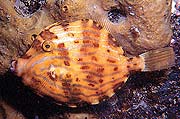 |
Fish are the largest group of vertebrates with over 32,000 species. This unit explores the ecology, anatomy, reproduction and more of Fish including Bony fish, Cartilaginous fish, Lobe-finned fish and Agnatha. Includes a Photogallery and videos from YouTube.
more .. |
|
|
| |
Porifera
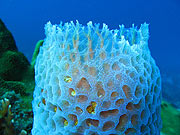 |
A major unit covering the ecology, anatomy, reproduction and more of Sponges including calcareous sponges, glass sponges and demosponsges. Includes a Photogallery and videos from YouTube.
more .. |
|
|
| |
Cnidaria
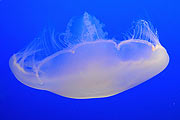 |
A major unit covering the ecology, anatomy, reproduction and more of Cnidaria including sea anemones, corals, sea pens, Box jellies, Jellyfish, Hydra, siphonophores, and Hydrozoa. Includes a Photogallery and videos from YouTube.
more .. |
|
|
| |
Crustaceans
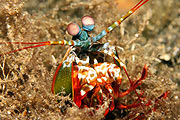 |
A major unit covering the ecology, anatomy, reproduction and more of Crustaceans including crabs, lobsters, crayfish, shrimp, krill, barnacles brine shrimp, copepods, ostracods, sandhoppers and mantis shrimp. Includes a Photogallery and videos from YouTube.
more .. |
|
|
| |
Echinoderms
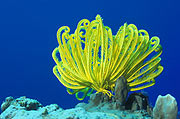 |
A major unit covering the ecology, anatomy, reproduction and more of Echinoderms including Sea stars, Brittle Stars, Sea cucumbers, Sea urchins, Sand Dollars, Feather stars and Sea lilies. Includes a Photogallery and videos from YouTube.
more .. |
|
|
| |
Molluscs of Australia
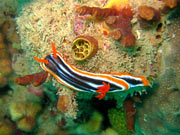 |
A major unit covering the ecology, anatomy, reproduction and more of Molluscs including Bivalves, Cephalopods, Chitons and Gastropods. Includes a Photogallery and videos from YouTube.
more .. |
|
|
| |
Aquaculture in Australia
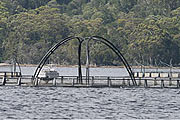 |
A major unit examing the farming of marine species around Australia. Aquaculture is the fastest growing primary industry in Australia.This unit contains general information about mariculture (marine aquaculture) in Australia and information relevant to each state and the Northern Territory.
This unit has been developed to provide the public and students with a comprehensive, easy to understand guide to Mariculture in Australia. Now with YouTube videos.
more .. |
|
|
| |
The World of Crabs
 |
A major unit looking at the biology and ecology of crabs. This unit contains information about the biology and ecology of crabs. It includes sections on crab anatomy, how crabs breathe, how they defend themselves, what they eat and what eats them, life cycles and more.
The information is mainly presented using Flash movies, there are also games, music and cartoons about crabs.
The unit was first developed as a CD for the Department of Sustainability and Environment Victoria with funding from COast Action/CoastCare.
more .. |
|
|
| |
Swan Bay Online Activities
A range of interactive online activities for students including jigsaw puzzles, a colouring book, "Bill Skills", "Riddles", a mudflat food web and a board game about Swan Bay.
These activities are aimed at promoting awareness of some of the species that use Swan Bay, features that help them to survive, food webs, and the importance of catchment health for the health of our bays.
|
 |
more ..
|
|
| |
| |
| |
|



